
Gentle Sleep Support in Sussex and online: How to Help Your Baby Sleep Without Cry-It-Out
If your baby is crying and you have already checked every box: fed, changed, held, offered the breast and they are still crying, you might be doing something exactly right.
I know how uncomfortable that sentence might feel to sit with. We appear to be wired to stop our babies' distress. And that place to soothe, to comfort, to make it better is beautiful. It is love in its most primal form.
But what if some crying is not a signal that something is wrong but a sign that something is right? What if your baby's tears are not a problem to be solved, but a process unfolding, safely, in your arms?
This is one of the most profound and liberating ideas at the heart of Aware Parenting.
Two Very Different Approaches to Baby Crying
Most parents are familiar with two camps when it comes to baby sleep and crying. On one side, the cry-it-out approach, leaving a baby to cry alone until they fall asleep. On the other, attachment parenting responding promptly, always soothing, never letting a baby cry if it can be helped.
Aware Parenting, developed by Dr. Aletha Solter a developmental psychologist, offers something that sits beyond both. It starts from a place that most parents feel deeply but rarely hear validated: that leaving a baby to cry alone can be harmful to their sense of trust and security. Babies need us. That is not a weakness it is biology.
But Aware Parenting adds that not ALL crying needs to be stopped. Some crying (when all immediate needs are met!), and when a baby is fully held and loved, is how babies heal.
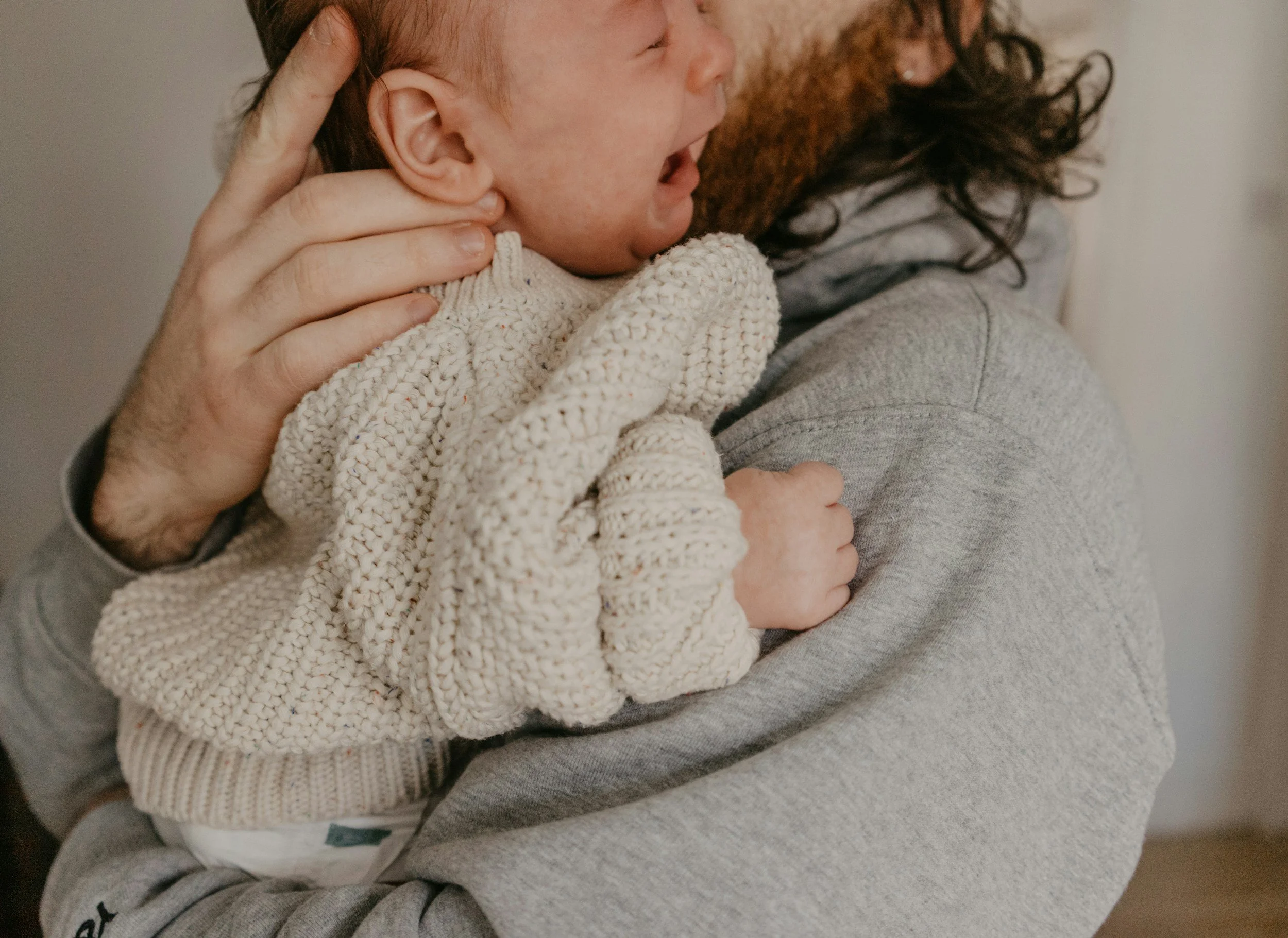
What Is Stress-Release Crying?
Babies carry stress from the moment they arrive and often before. Pregnancy is not always calm. Birth can be overwhelming, even traumatic. The world outside the womb is loud, bright, and full of sensation. Daily life brings overstimulation, the frustrations of learning new skills, and the occasional fear or upset. While in London this week I really looked at the world though my daughters’ eyes as a baby (who is now 13!) and know knowing how sensitive she is, truly saw the intensity of what she must have experienced. And gosh did we experience A LOT of crying! Which having not come across Aware Parenting yet I did everything to stop.
Research shows that crying causes real physiological changes it releases stress hormones, and afterwards, the body settles into a state of homeostasis. Just as a fever is the body fighting an infection (not the infection itself), crying (or raging) in arms is the baby's nervous system doing its own vital repair work. When the baby starts to crawl, they also may not choose to be held when crying but we can still offer our loving presence.
Stress-release crying looks a little different from hunger crying or pain crying. It often comes at the end of a busy day. It may be intense but rhythmic. And crucially when your baby is held lovingly and all their immediate needs are met, they are not in distress from being alone or unheard. They are releasing. There is a difference.
Personal example
I wish I had known this information when my daughter was born as I distinctly remember a night well it actually started early evening, when she didn’t stop crying it was consistent and we were at a loss at what to do. We tried everything feed, nappy, temperature, she was being held, a strange dance, rocking, bouncing you name it we tried it. But I didn’t have the information around crying being a stress release mechanism. I have reflected on that day many times as my husband’s brother and family had come to visit and she had been held by a lot of people. Putting myself in her shoes now she would have experienced different touch, different smells, separation etc etc etc. so to release the stress from the intensity of this experience I now know she needed to cry in my arms with me connecting the dot to why. When I came across Aware Parenting I started practicing this when I felt I had capacity and when I felt sure I had met all needs and was always amazed at how content she was afterwards.
The Crying-in-Arms Approach: What It Looks Like
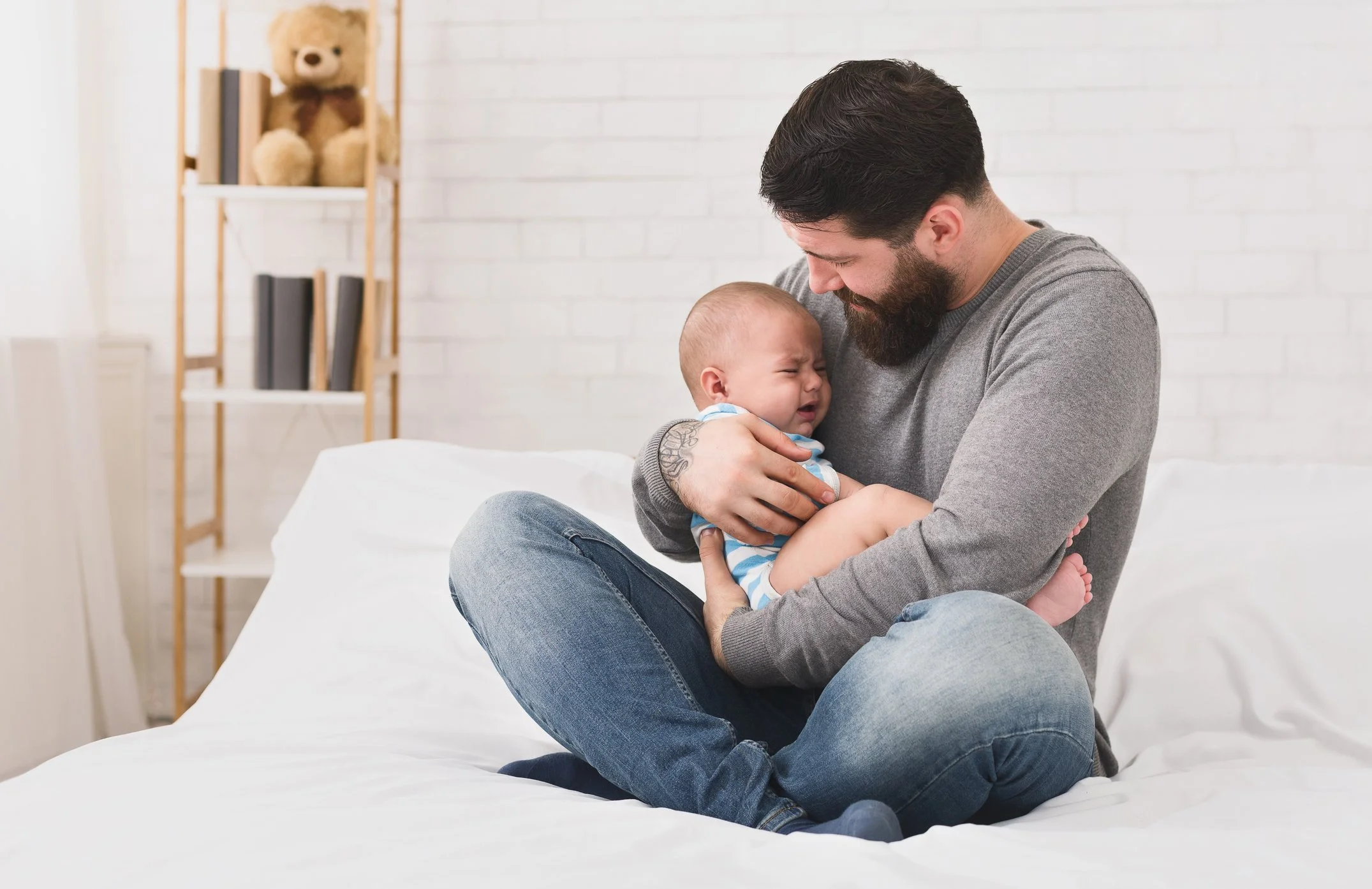
This is NOT about letting your baby cry. It is about being fully present while they do. Here is what it looks like in practice:
• Check all immediate needs first: hunger, discomfort, temperature, pain. Rule out anything physical.
• Once needs are met, hold them close, in whatever position feels comfortable for both of you.
• Look into their eyes. Speak softly. Let them know you are here, you are not going anywhere, and they are safe to feel whatever they feel.
• Trust that your loving, steady presence is the remedy.
• Let the crying run its course. Afterwards, you will often find a deeply relaxed baby one who falls asleep peacefully, or looks up at you with bright, calm eyes.
It is worth saying clearly: this is completely different from cry-it-out. Your baby is not alone. Research suggests babies’ cortisol is raised due to separation from mothers rather the crying itself. They are not unheard. They are held, witnessed, and loved and that is what makes the release safe and healing.
What About Us, The Parents?
Holding a crying baby without trying to stop the crying (or raging) is one of the hardest things for parents! I still find it hard with my now 10 and 13 year old. It can bring up our own discomfort with emotions from our own early experiences of not being allowed to cry, or being left alone with our feelings.
This is why I talk so often about parent’s own healing alongside their child’s. When we tend to our own inner child the part of us that learned that tears were too much, too messy, too inconvenient we free ourselves to hold space for our little ones without it costing us so much.
If you find that your baby's crying floods you with anxiety, rage, or a desperate need to make it stop at any cost, that is important information. It is not a sign that you are failing. It is an invitation to look gently at what those tears are touching in you. And important to remember holding space requires being resourced. So please reach out for whatever support you may need!
A Note on Trust
The crying-in-arms approach is not a technique to master. It is a relationship to grow into. The more you sit with your baby in their distress calm, connected, the more they learn that their emotions are welcome. That nothing they feel is too big for you.
And the most beautiful thing? Research suggests that babies who have the space to release stress in arms tend to sleep better, feed more calmly, and show less aggression as toddlers. Not because they have been taught to suppress or manage but because they have been truly, deeply heard.
Want support with your baby's sleep or crying?
You don't have to figure this out alone. I offer gentle, attachment-focused support for families navigating sleep and big emotions, without cry-it-out and without judgment and at your pace. Book a free 20-minute discovery call whether you are in Forest Row, East Grinstead or Sussex or online and let's explore what your family needs.
Book your free discovery call at flourishingchildhood.com
Further reading
This post was inspired by the work of Dr. Aletha Solter, founder of the Aware Parenting Institute. awareparenting.com

Hi, I’m Rebecca.
I’m a parent coach, Aware Parenting Instructor, Soul Collage facilitator, and therapeutic play practitioner. I support parents, caregivers and child care professionals in healing from stress and trauma so they can nurture compassionate connections with themselves and the children in their care. If you’d like to explore ways to support your child’s emotional well-being, I invite you to: Join my Substack for insights on parenting, book a free discovery call, and explore my offerings to help you and children in your care flourish.